WordPress themes for restaurants, music and nightlife
By Shehzad Hussain · Last updated: November 2026
Friday at 6 p.m., a group of friends is choosing where to eat. One of them opens your website on a phone, and you have about twenty seconds. If the menu is a PDF that will not load, the opening hours are on a different page, and the booking button is nowhere to be found, they are already looking at the next place. Restaurant, music, and nightlife websites are decided in moments like that, and the theme has to win them.
Menus are the first thing to get right, and PDFs are the enemy. A menu published as a downloadable file is invisible to search engines, unreadable on small screens, and impossible to update quickly when a dish changes. A good theme gives you proper menu layouts: sections, dishes, prices, and dietary notes, all as real page content that can be edited in minutes. Daily specials and seasonal changes should be just as easy. If updating the menu requires a designer, your menu will be out of date, and an out-of-date menu is worse than a simple one.
Reservations and events, front and centre
Booking a table should be possible from every page that matters: the homepage, the menu page, the contact page. The theme should work with standard reservation tools and keep the flow short: party size, date, time, name, contact, done. Long forms lose tables. For venues with live music or nightlife events, the same logic applies to the events calendar: what is on tonight, who is playing, what time doors open, and how to get in. A gig listing buried three clicks deep might as well not exist.
Hours and location are the details people check at the last minute, often while already travelling. They should be visible in the header or footer of every page, not hidden on a contact page. A tap-to-call phone number, a map link that opens in the visitor’s navigation app, and parking or transport notes cover most of what a guest needs. If a visitor has to hunt for your address, you have already cost yourself a table.
Atmosphere without the weight
Photography and video sell atmosphere, but they also slow sites down, and a slow site loses the Friday-night crowd before they see a single image. The theme should handle galleries efficiently, loading images progressively and keeping the homepage fast even with rich visuals. Video backgrounds look impressive on a desktop demo and often hurt on mobile, where most of your visitors are. Use them sparingly, if at all, and always with a fast-loading fallback.
Social proof in this industry is immediate and visual: recent reviews, photos from guests, upcoming events with real lineups. The theme should present reviews honestly and keep event information current. An events page advertising last month’s gigs tells visitors the venue is either closed or careless, neither of which fills seats. Assign someone to update events weekly, and choose a theme that makes that update a five-minute job, not a project.
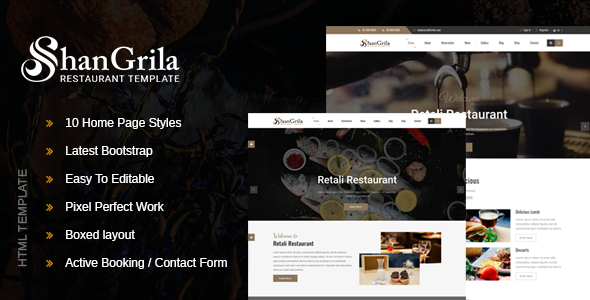
For an example of food-focused design, look at ShanGrila, a food and restaurant template, which shows menu layouts, gallery sections, and restaurant information arranged for hungry visitors in a hurry. Choose the theme that puts the menu, the booking button, and tonight’s event where thumbs can reach them. In this business, the website is the front door. Make it easy to walk through.
Writing a menu that sells
A menu is a sales document, and the way dishes are described changes what people order. Names should be appetising without being cryptic: a guest should understand what a dish is without asking the server to translate. Descriptions work best when they are short and sensory — a key ingredient, a cooking method, a flavour note — rather than long paragraphs that nobody reads under restaurant lighting. Dietary information should be consistent and visible: symbols or notes for vegetarian, vegan, gluten-free, and common allergens, applied the same way across the whole menu, so guests with dietary needs can order confidently instead of interrogating staff.
Pricing presentation matters too. Prices should be clear and consistent, with no surprises about service charges or extras. If certain dishes carry supplements or sharing platters are priced per person, say so on the menu, not at the bill. And update the menu the moment something changes: a dish that is listed but unavailable disappoints more than a shorter menu would have. The theme should make menu edits a two-minute task, because a menu that is easy to update stays accurate, and an accurate menu is part of good hospitality.
- Describe dishes briefly and sensuously: ingredient, method, flavour.
- Apply dietary symbols consistently across the whole menu.
- State prices, supplements, and charges plainly on the menu itself.
- Update the menu immediately when a dish changes or sells out.
People choose where to eat and where to spend the evening in moments, not after deliberation. Win those moments with a readable menu, a visible booking button, and tonight’s event in plain sight, and the room will take care of itself.
What this post covers, at a glance
The table below pulls together the main points of this guide to WordPress themes for restaurants music and nightlife so you can scan them before reading the full article.
| Topic in this post | The post’s key point |
|---|---|
| Reservations and events, front and centre | Booking a table should be possible from every page that matters: the homepage, the menu page, the contact page. |
| Atmosphere without the weight | Photography and video sell atmosphere, but they also slow sites down, and a slow site loses the Friday-night crowd before they see a single image. |
| Writing a menu that sells | A menu is a sales document, and the way dishes are described changes what people order. |
Frequently asked questions
Why does the post emphasise reservations and events, front and centre for WordPress themes for restaurants music and nightlife?
Booking a table should be possible from every page that matters: the homepage, the menu page, the contact page. In practice, that means judging a WordPress theme on this point before you buy, not after the site is built — open the live demo, find the section the post describes, and check it with your own content in place.
What makes Shangrila a good fit for a WordPress theme for restaurants music and nightlife?
ShanGrila, a food and restaurant template, which shows menu layouts, gallery sections, and restaurant information arranged for hungry visitors in a hurry. That is the post’s own judgement, and it is worth verifying against the live demo: check the Shangrila demo with your own images and copy, because a theme that looks right with stock content can feel different with yours.
How much should I budget for a WordPress theme for restaurants music and nightlife?
The post does not quote a price for WordPress themes for restaurants music and nightlife, so treat the theme as one line in a small budget, not the whole budget. As a guide, WordPress themes on Expert Themes are listed at $20 and HTML templates at $10, with hosting and a domain on top. Check the product page for the current price before you decide, and count any paid plugins you will need.
Will a WordPress theme for restaurants music and nightlife work properly on a phone?
The post treats mobile as a first check rather than an afterthought, and that is the right order: most visitors in this niche arrive on a phone, so open the demo on your own phone and test the menu, the forms, and the main call to action before you buy.
How should I test a WordPress theme for restaurants music and nightlife before buying it?
Run the live demo through Google PageSpeed Insights and open it on a real phone, not just a desktop browser — the post makes this exact point about demos being the best-case scenario. Load the pages your visitors will actually use, click through the forms, and check that the layout holds with your own images and text. If the demo is slow or awkward, your site will be worse, not better.
Prices and theme availability change — check the product page before buying. The themes named here were current when the post was written, so test the live demo against your own content before choosing, and confirm the theme is still actively updated.
Sources
- WordPress.org — Theme Handbook: theme requirements and review guidelines (accessed November 2026)
- Expert Themes — Shangrila product page (accessed November 2026)
- ThemeForest — Expert Themes seller page, member since July 2016 (accessed November 2026)