One-Page vs Multi-Page Website: Which Is Better for You?
One-Page vs Multi-Page Website: Which Is Better for You?
Direct answer: A one-page website is better when you have one thing to say to one audience — a launch, a single service, an event, a personal portfolio — because it keeps the visitor moving toward a single action with nothing to get lost in. A multi-page website is better when you have several services, several audiences, or anything you want Google to find separately, because each page can rank for its own topic and each visitor can go straight to what they need. Most established businesses should build multi-page; most single-purpose sites should start one-page. The deciding question is not how much content you have, but how many different things a visitor might be looking for.
What is a one-page website, exactly?
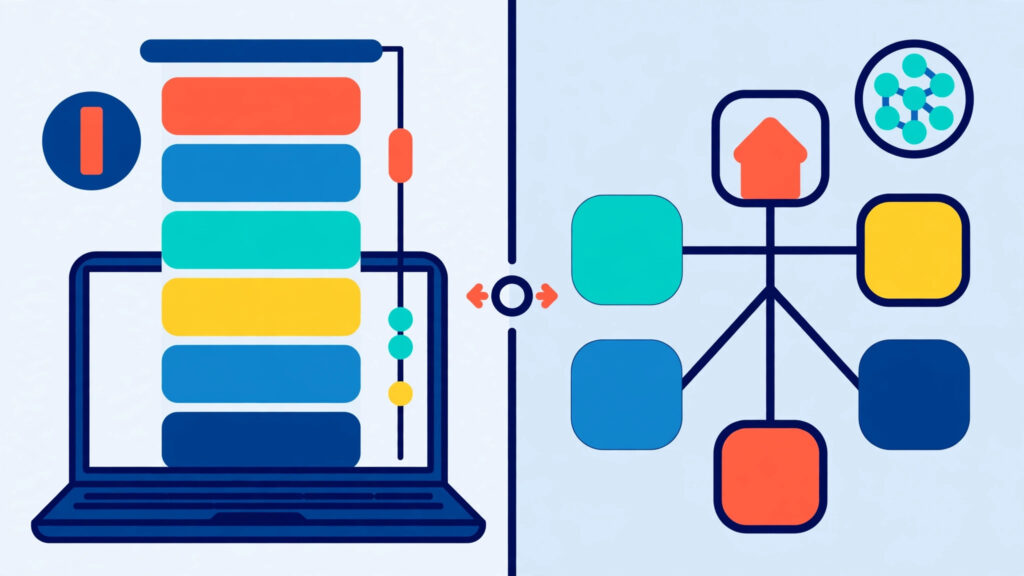
A one-page website puts everything on a single page that the visitor scrolls through: a hero section at the top, then sections for what you do, why you are good at it, proof, pricing, and contact, usually reached through a menu that scrolls to each section rather than loading a new page. A multi-page website splits the same content into separate pages — a home page, a services page for each service, an about page, a blog, a contact page — each with its own address.
The difference is not about length. A one-page site can be very long, with a dozen sections, and a multi-page site can be small, with five short pages. The difference is about structure: one destination versus many. That structural choice shapes everything else — how a visitor finds what they want, how Google understands the site, how much work it is to keep current, and how the site grows.
Both are built with the same tools. A one-page site can be a WordPress theme with a long scrolling home page, or a single HTML template; a multi-page site is the same theme or template with more pages added. The choice is not a technical one, and it is not permanent — a one-page site can grow into a multi-page site later. But starting with the wrong structure costs time, so it is worth deciding deliberately rather than by accident.
When does a one-page website win?
A one-page site wins when the visitor’s job is simple and singular. A product launch, a coming-soon page, a conference, a single service, a freelancer’s portfolio, a restaurant with a menu and a booking button — in each case the visitor needs one story, told in order, ending in one action. A one-page site controls that order: the visitor meets the offer, then the proof, then the price, then the contact form, in the sequence you chose. There is no menu to wander into and no dead end to get stuck on.
It also wins on focus. Every extra page is an extra chance for a visitor to leave without doing the one thing the site exists for. A one-page site removes that choice, which is why it is the standard format for landing pages and campaigns: a visitor who arrives from an advert or a social post should not have to decide where to go, because the page has already decided for them.
And it wins on effort. One page is faster to build, faster to write, and easier to keep current than ten. A small business that has one afternoon a month for its website will keep a one-page site up to date; the same business with a ten-page site will let nine of those pages go stale. A site with one accurate page beats a site with ten pages, nine of which are out of date.
The trade-off is depth. A one-page site cannot explain five services properly, cannot carry a blog, and cannot give a visitor who wants one specific thing a direct route to it. If your business has more than one story to tell, a single scrolling page starts to feel like a corridor with no doors — the visitor keeps scrolling past things they do not want, looking for the one thing they do.
When does a multi-page website win?
A multi-page site wins as soon as you have more than one audience or more than one offer. A consultancy with five service lines, a clinic with ten treatments, a shop with a catalogue, a school with courses for different age groups — each audience wants its own page, written for them, that they can land on directly from a search or a link. A multi-page site gives every offer its own front door.
It also wins on credibility. A business with a proper about page, a team page, case studies, and a blog looks established in a way a single scrolling page rarely does, because the visitor can see the depth behind the pitch. That depth matters most for high-value decisions: nobody hires a law firm or a builder from a single page, because the decision needs more evidence than one page can carry.
And it wins on growth. A multi-page site grows one page at a time: a new service gets a new page, a new case study gets a new page, and the rest of the site is untouched. A one-page site grows by getting longer, which eventually breaks the format — a page that takes three minutes to scroll is not a page any more, it is a document. If you expect the business to add services, locations, or team members over the next two years, start multi-page and save yourself a rebuild.
The trade-off is maintenance. More pages mean more pages to keep accurate, more links to check, and more chances for a visitor to land on a page that does not lead anywhere useful. A multi-page site needs a habit of updating it — a small one, but a real one. Our guide on choosing colours for your website and our guide to website typography both apply whichever structure you choose, because a consistent look is what makes either format feel professional.
How does the choice affect SEO?
This is where the difference is biggest, and it is the reason most businesses should choose multi-page. Google ranks pages, not websites, and each page can rank for its own topic. A multi-page site can have a page for “accounting services for startups,” another for “tax returns for freelancers,” and another for “payroll for small businesses” — three chances to be found by three different searches. A one-page site has one page, which means one main topic, one title, and one chance to rank. It can rank well for that one topic, but it cannot be the answer to five different questions at once.
That does not mean a one-page site cannot rank. For a single, focused topic — a local plumber, a single-product launch, a wedding venue — one strong page can outrank a thin multi-page site, because Google rewards a page that answers the question well over five pages that answer it badly. But the ceiling is lower: there is a limit to how many searches one page can serve, however good it is.
The practical rule is to count the topics you want to be found for. If the answer is one — your business name, your one service, your one town — a one-page site is enough. If the answer is five or more — several services, several locations, several kinds of customer — you need a page for each, which means multi-page. This is also why a blog changes the answer: a blog is, by definition, many pages, and a business that publishes articles needs a multi-page structure to hold them. If you plan to publish at all, build multi-page from the start.
What about cost, speed, and maintenance?
Cost is close enough not to decide the question. A one-page site is cheaper to build — fewer pages to write and design — but the difference is usually a matter of hours, not weeks, and a good theme makes both fast to set up. Hosting costs the same either way, and a domain costs the same either way. If a developer quotes you far more for a multi-page site, ask what the extra pages actually are — five pages built from the same template should not cost five times as much as one.
Speed is a wash. A one-page site loads one large page, which can be slow if it is full of images and animations; a multi-page site loads smaller pages, but the visitor loads more of them. What matters is the total weight of what you put on the page, not the number of pages — a lean one-page site beats a bloated multi-page site, and vice versa. Our guide on speeding up a slow WordPress site covers the checks that matter for either format.
Maintenance is where the formats genuinely differ. A one-page site has one page to update, one page to check for broken links, and one page to review after any change. A multi-page site has more of everything, and it needs a schedule — a monthly check of the main pages, a fix for anything out of date. That is a small job, but it is a real one, and it is the main reason small businesses with no time for their website sometimes regret going multi-page. Be honest about how much time you will actually spend: a site you maintain beats a site you abandon, whatever its structure.
How do you decide for your own site?
Ask three questions. First, how many different things will a visitor be looking for? One thing — one page. Several things — several pages. Second, how many topics do you want Google to find you for? One topic — one page. Several topics — several pages. Third, how will the site grow over the next two years? If it will stay the same — one page. If it will add services, case studies, or articles — multi-page.
If the answers are mixed — one main service, but a blog you might start, or two services that could grow — start multi-page anyway. The cost of starting multi-page when one page would have done is small: a few extra pages, most of them short. The cost of starting one-page and outgrowing it is a rebuild: restructuring the site, redirecting the address, and re-doing the work you already did. Err toward the structure you will need in two years, not the structure you need today.
Whatever you choose, pick a theme that supports it. A multipurpose theme such as Sorto works for both — its flexible layouts can be a single scrolling home page or a full multi-page site — while a business theme such as Tallinn is built around the service pages and team pages a multi-page company site needs. Our collection of the best business WordPress themes covers both patterns, and our guide on choosing the right WordPress theme walks through the decision in full.
Frequently asked questions
Is a one-page website bad for SEO?
Not bad, but limited. A one-page site can rank well for one focused topic, but it cannot rank for five different topics the way five separate pages can. If search traffic matters and you have more than one service, a multi-page site will bring in more visitors over time.
Can a one-page website have a blog?
Not really. A blog is many pages by nature, and adding one turns the site into a multi-page site. If you plan to publish articles, build multi-page from the start rather than bolting a blog onto a single page.
Are one-page websites cheaper to build?
Usually, but not by much. One page means less writing and design, but the difference is hours rather than weeks, and hosting and domain costs are the same. Choose on structure and SEO, not on a small price difference.
Can I change from one-page to multi-page later?
Yes, but it is a rebuild of the structure, not a small edit: the content has to be split across new pages, the menu rebuilt, and the old address redirected. It is much easier to start multi-page if you think you will need it within two years.
Which is better for a small business?
It depends on the business. A tradesperson, a single-service freelancer, or a restaurant does well with one page. A consultancy, a clinic, or any business with several services does better multi-page. Count the services and the audiences: one of each means one page; more than one of either means more pages.