Best nonprofit React website templates for charities and NGOs

By Shehzad Hussain · Last updated: November 2026
Picture a donor who hears about your charity on the radio, pulls out a phone on the bus, and opens your site. You have about thirty seconds before that person either donates or drifts away. Everything about a nonprofit site should be built around that moment, and that is exactly where a React template earns its keep or fails the test.
What a charity site has to do before anything else
A charity website is not a brochure. It has three jobs, and only three: let someone give money without friction, show them clearly where the money goes, and give them a reason to come back. Every page that does not serve one of those jobs is decoration, and decoration costs attention that a donor will not give twice. React templates built for nonprofits tend to put the donation action front and centre rather than burying it three clicks deep, which is the single biggest design decision on the whole site.
The other thing donors look for, often without realising it, is evidence. A short story about one person helped, a photograph from a real project, a plain-language breakdown of how donations are spent. A template that gives you proper story pages and impact sections matters more than one with twenty homepage variations you will never use.
Where React actually earns its place
React is a component system, and charity sites are unusually component-shaped. A campaign card appears on the homepage, on the campaigns page, and in search results. A donation form appears in a popup, on a dedicated page, and at the end of a story. An impact counter appears wherever a milestone is celebrated. In a React template, each of those is built once and reused everywhere, so a campaign launched on Monday looks consistent by Monday afternoon instead of drifting into three slightly different designs.
That reuse also helps with the interactive parts donors now expect. A donation form that updates the total as someone picks an amount, a progress bar that moves when a gift is made, a toggle between a one-time gift and a monthly gift. These are small interactions, but they are the difference between a form that feels alive and one that feels like paperwork.
The parts donors touch most
When you compare templates, ignore the hero sliders and look at these four pieces instead:
- The donation flow itself: how many steps, whether the amount selection is obvious, whether monthly giving is presented as a normal choice rather than hidden.
- Campaign pages: a clear goal, a visible total raised, a deadline that means something, and a story that explains why this campaign exists.
- Recurring giving: the template should make it easy for a donor to set up a monthly gift and just as easy to manage it later.
- Proof pages: annual reports, project updates, and stories from the field, laid out so a sceptical donor can verify you in two minutes.
If a template handles those four well, the rest is polish. If it handles them badly, no amount of animation will save it.
Speed and access are not extras
Many donors will reach you on a cheap phone over a slow connection, and some will use a screen reader or navigate by keyboard. A React template can be fast, but only if it is built that way: pages that load the content first and the decoration second, images sized for phones, text that stays readable when styles fail. Test any template you like on a real phone with a throttled connection before you commit. A donation page that takes six seconds to appear has already lost people who would have given.
Accessibility deserves the same test. Tab through the donation form without a mouse. If you cannot complete a gift that way, neither can a donor who relies on a keyboard, and that is a donation lost for no good reason.
The honest question: who keeps it running
Here is the part template shops rarely mention. A React site needs someone comfortable with modern JavaScript to maintain it, update it, and add the next campaign. If your charity has a developer or a reliable volunteer with those skills, React gives you a fast, flexible site that grows cleanly. If nobody on your team touches code, that same site becomes a bottleneck: every small change waits for outside help, and help costs money a charity would rather spend on its cause.
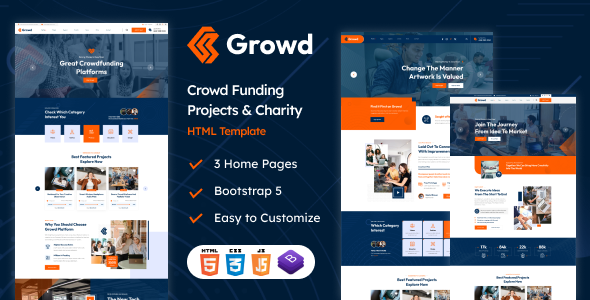
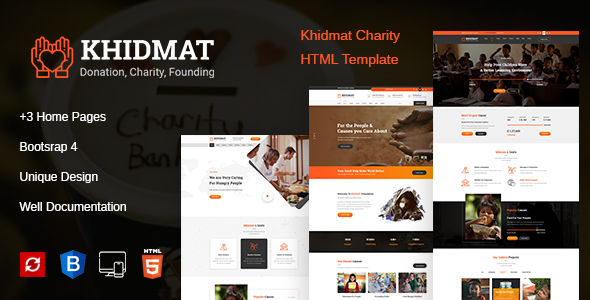
Before you choose, look at how donation pages are actually laid out in proven charity designs. The charity-focused GROWD template and the Khidmat charity template both show the pattern worth copying: a clear gift amount selector, a short explanation of impact, and a form that asks for nothing it does not need. Whatever stack you pick, that pattern is the standard to hold your React template against.
Keeping the giving experience honest
One more detail separates charity sites that raise money from those that merely describe need: the donation page must feel as trustworthy as the cause. That means showing exactly what happens after the gift, whether the donor receives a receipt immediately, and how the charity will report back. A short line about where the money goes, placed beside the amount selector, does more than a whole page of mission statements.
Choose the template that makes giving easy on a phone, shows impact honestly, and fits the skills of the people who will run it. A charity site is judged by donations completed, not by how clever its code is.
The themes in this post, compared
Every theme below is named in the article itself. The post does not quote prices, so check the product page for the current price.
| Theme | Format | What the post says about it | Price noted in the post |
|---|---|---|---|
| Growd | HTML template | The charity-focused GROWD template and the Khidmat charity template both show the pattern worth copying: a clear gift amount selector, a short explanation of impact, and a form that asks for nothing it does not need. | See the product page |
| Khidmat | HTML template | Khidmat charity template both show the pattern worth copying: a clear gift amount selector, a short explanation of impact, and a form that asks for nothing it does not need. | See the product page |
| React | React template | React Templates · 04 Oct, 2026 Best nonprofit React website templates for charities and NGOs Picture a donor who hears about your charity on the radio, pulls out a phone on the bus, and opens your site. | See the product page |
Frequently asked questions
Why does the post emphasise what a charity site has to do before anything else for nonprofit React website templates for charities and ngos?
A charity website is not a brochure. It has three jobs, and only three: let someone give money without friction, show them clearly where the money goes, and give them a reason to come back. In practice, that means judging a React template on this point before you buy, not after the site is built — open the live demo, find the section the post describes, and check it with your own content in place.
What makes Growd a good fit for a nonprofit React website template for charities and ngos?
The charity-focused GROWD template and the Khidmat charity template both show the pattern worth copying: a clear gift amount selector, a short explanation of impact, and a form that asks for nothing it does not need. That is the post’s own judgement, and it is worth verifying against the live demo: check the Growd demo with your own images and copy, because a theme that looks right with stock content can feel different with yours.
What makes Khidmat a good fit for a nonprofit React website template for charities and ngos?
Khidmat charity template both show the pattern worth copying: a clear gift amount selector, a short explanation of impact, and a form that asks for nothing it does not need. That is the post’s own judgement, and it is worth verifying against the live demo: check the Khidmat demo with your own images and copy, because a theme that looks right with stock content can feel different with yours.
How much should I budget for a nonprofit React website template for charities and ngos?
The post does not quote a price for nonprofit React website templates for charities and ngos, so treat the theme as one line in a small budget, not the whole budget. As a guide, WordPress themes on Expert Themes are listed at $20 and HTML templates at $10, with hosting and a domain on top. Check the product page for the current price before you decide, and count any paid plugins you will need.
Will a nonprofit React website template for charities and ngos work properly on a phone?
The post treats mobile as a first check rather than an afterthought, and that is the right order: most visitors in this niche arrive on a phone, so open the demo on your own phone and test the menu, the forms, and the main call to action before you buy.
Prices and theme availability change — check the product page before buying. The themes named here were current when the post was written, so test the live demo against your own content before choosing, and confirm the theme is still actively updated.
Sources
- React — official documentation, react.dev (accessed November 2026)
- Expert Themes — Growd product page (accessed November 2026)
- Expert Themes — Khidmat product page (accessed November 2026)
- ThemeForest — Expert Themes seller page, member since July 2016 (accessed November 2026)