Best nonprofit HTML website templates for charities and NGOs

By Shehzad Hussain · Last updated: November 2026
Small charities often run their websites the way they run everything else: on goodwill, a tiny budget, and whoever in the team happens to know a bit about computers. That reality shapes what a good website template looks like for them. It should be cheap to host, hard to break, and simple enough that a volunteer can update it without a course. A static HTML template fits that reality well — provided the charity goes in with clear eyes about what static means and what it does not.
Why static makes sense for a small charity
A charity site does not change daily. It announces campaigns, explains the mission, invites donations, and recruits volunteers — content that changes weekly or monthly at most. A static site serves that content fast, costs very little to host, and has almost nothing to maintain: no admin login to protect, no plugins to update, no database to back up. For an organisation without IT staff, that simplicity is a genuine advantage. The trade-off is that updates require editing files, so the charity needs one person — staff or volunteer — comfortable doing that, or a simple arrangement with whoever built the site. Agree that arrangement before launch, not after the first urgent update.
The pages a charity site cannot skip
Whatever template you choose, certain pages carry the whole mission. A homepage that states plainly what the charity does and who it helps, with a donation action that is visible but not aggressive. A causes or campaigns section where each cause explains the need, the plan, and what a donation achieves. A volunteer page that describes real roles and a simple way to apply. And an about section with real people, real contact details, and honest information about funding — because donors check. If a template handles these four areas cleanly, it will serve the charity; if it only offers a beautiful hero image, keep looking.
Donations on a static site, done honestly
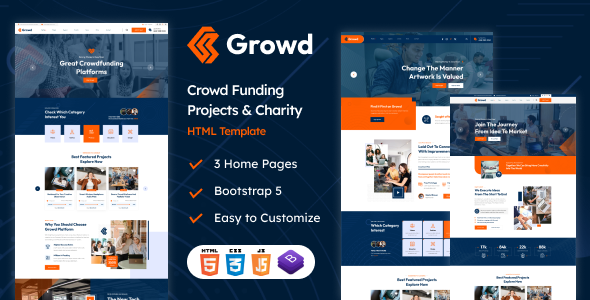
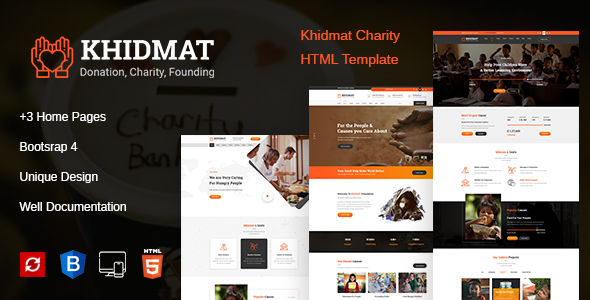
A static site cannot process payments itself, and that is fine: donations should go through a trusted third-party platform anyway, whether a dedicated charity giving service or a standard payment provider. The template’s job is to make that handoff smooth — clear donation buttons, suggested amounts with explanations, and a thank-you page that confirms the gift and invites the donor to stay involved. Study how charity templates structure this flow: the Khidmat charity, fundraising and donation template and the Growd crowdfunding charity template both show how campaign pages, progress displays, and donation calls to action can be laid out clearly, which is a useful model even when your own donation button leads to an external platform.
Staying alive between campaigns
The most common charity website failure is abandonment: a site launched for one appeal and never touched again. Donors notice, and a stale site suggests a stale organisation. Build a sustainable rhythm before launch: one update a month is enough — a story from the field, a volunteer profile, a campaign result. Keep the template’s structure simple so those updates take minutes, not an afternoon. And keep the essentials current above all: contact details, donation links, and the homepage statement of what the charity does. A small, current, honest site will outperform a grand, neglected one every time.
Annual reports and showing your working
Donors increasingly ask a simple question before giving: where does the money go? A charity that answers that question openly, on its own website, stands apart from one that hides behind slogans. An annual report page — written in plain language, with income and spending explained honestly and the year’s achievements described specifically — does more for trust than any design flourish. The template should give that page a proper home: a documents or transparency section where reports, accounts summaries, and governance information live together and stay findable year after year. Impact reporting deserves the same honesty. Describe what was done, who benefited, and what did not work as well as hoped; donors respect organisations that admit difficulties and explain what they learned. Keep the language human and the numbers real — never dress up estimates as precise results, and never claim outcomes the charity cannot evidence. Over time, a public record of reports and results becomes a powerful asset: grant-makers check it, major donors read it, and journalists cite it. A small charity that publishes a modest, honest report every year looks more credible than a large one that publishes nothing, and the static template makes that publishing cheap and durable. Transparency is not a compliance chore for charities; it is the foundation of every future donation.
Show your working, every year, and the trust you build will outlast any single campaign.
For a small charity, the right HTML template is the one a volunteer can keep alive for years: fast, cheap, simple, and built around the pages that turn sympathy into support.
The themes in this post, compared
Every theme below is named in the article itself. The post does not quote prices, so check the product page for the current price.
| Theme | Format | What the post says about it | Price noted in the post |
|---|---|---|---|
| Growd Crowdfunding Charity | HTML template | Growd crowdfunding charity template both show how campaign pages, progress displays, and donation calls to action can be laid out clearly, which is a useful model even when your own donation button leads to an external platform. | See the product page |
| Growd | HTML template | Growd crowdfunding charity template both show how campaign pages, progress displays, and donation calls to action can be laid out clearly, which is a useful model even when your own donation button leads to an external platform. | See the product page |
| Khidmat | HTML template | Khidmat charity, fundraising and donation template and the. | See the product page |
Frequently asked questions
Why does the post emphasise why static makes sense for a small charity for nonprofit HTML website templates for charities and ngos?
A charity site does not change daily. It announces campaigns, explains the mission, invites donations, and recruits volunteers — content that changes weekly or monthly at most. In practice, that means judging an HTML template on this point before you buy, not after the site is built — open the live demo, find the section the post describes, and check it with your own content in place.
What makes Growd Crowdfunding Charity a good fit for a nonprofit HTML website template for charities and ngos?
Growd crowdfunding charity template both show how campaign pages, progress displays, and donation calls to action can be laid out clearly, which is a useful model even when your own donation button leads to an external platform. That is the post’s own judgement, and it is worth verifying against the live demo: check the Growd Crowdfunding Charity demo with your own images and copy, because a theme that looks right with stock content can feel different with yours.
What makes Growd a good fit for a nonprofit HTML website template for charities and ngos?
Growd crowdfunding charity template both show how campaign pages, progress displays, and donation calls to action can be laid out clearly, which is a useful model even when your own donation button leads to an external platform. That is the post’s own judgement, and it is worth verifying against the live demo: check the Growd demo with your own images and copy, because a theme that looks right with stock content can feel different with yours.
How much should I budget for a nonprofit HTML website template for charities and ngos?
The post does not quote a price for nonprofit HTML website templates for charities and ngos, so treat the theme as one line in a small budget, not the whole budget. As a guide, WordPress themes on Expert Themes are listed at $20 and HTML templates at $10, with hosting and a domain on top. Check the product page for the current price before you decide, and count any paid plugins you will need.
Will a nonprofit HTML website template for charities and ngos work properly on a phone?
The post treats mobile as a first check rather than an afterthought, and that is the right order: most visitors in this niche arrive on a phone, so open the demo on your own phone and test the menu, the forms, and the main call to action before you buy.
Prices and theme availability change — check the product page before buying. The themes named here were current when the post was written, so test the live demo against your own content before choosing, and confirm the theme is still actively updated.
Sources
- MDN Web Docs — HTML: HyperText Markup Language (accessed November 2026)
- Expert Themes — Growd Crowdfunding Charity product page (accessed November 2026)
- Expert Themes — Growd product page (accessed November 2026)
- ThemeForest — Expert Themes seller page, member since July 2016 (accessed November 2026)