SEO agency WordPress themes for lead generation

By Shehzad Hussain · Last updated: November 2026
There is no faster way to lose a potential client than to run an SEO agency whose own website does not generate leads. Prospects notice. They arrive wondering whether you can do for them what you apparently cannot do for yourself, and they judge your homepage the way they would judge a plumber’s leaking tap. An SEO agency theme has to prove, in the first minute, that the agency understands visibility — and then make enquiring effortless.

Services pages are where most agency sites go vague. “We do SEO” tells a prospect nothing. A good theme gives you layouts that break services into specifics: technical audits, local search, content, link building, reporting — each with its own page explaining what is involved, who it suits, and what the engagement looks like. Prospects compare agencies by these pages, and the one that explains its process most clearly usually wins. If your theme forces every service into an identical three-line card, your most thoughtful offering will read like your most generic one.
Proof is the whole pitch
SEO is intangible, so proof carries the sale. Case studies should be proper pages, not sliders: the client’s situation, what was done, and the outcome, presented honestly and specifically. Rankings, traffic, and enquiry improvements are the numbers prospects look for, and the theme should present them in scannable formats — summary figures at the top, detail below — rather than buried in paragraphs. Client logos and testimonials support the story but cannot replace it. A theme with weak case study templates will push you toward vague claims, and vague claims are exactly what sceptical prospects ignore.
Your own search visibility is also on display. The theme should produce clean, fast pages with proper heading structure, sensible URLs, and no technical obstacles to indexing. That sounds basic, but many visually impressive themes fail it: bloated code, duplicate content from demo pages, or JavaScript that hides content from crawlers. Test the theme’s output with the same tools you would use on a client’s site. If you would flag it for a client, do not ship it for yourself.
Lead capture, done properly
Enquiry paths should match how prospects actually behave. Some want a quote immediately; others want a free audit first; many want to read your content for weeks before committing. The theme should support all three: a visible quote or consultation form, a free audit offer with a simple intake form, and a blog or resources section that captures subscribers for the slow burn. Audit forms deserve care: ask for the website address and the main goal, and little else at first. A twelve-field audit form is a filter that removes your best leads.
Local presence matters for most agencies, even remote ones. A location page, clear contact details, and a Google Business Profile that matches the site all build trust. The theme should make contact information easy to find on every page, not hidden behind a contact link. And reporting should be visible as a service, not an afterthought: a page explaining what clients receive, how often, and in what format answers the question every prospect asks after price, which is “how will I know it is working?”
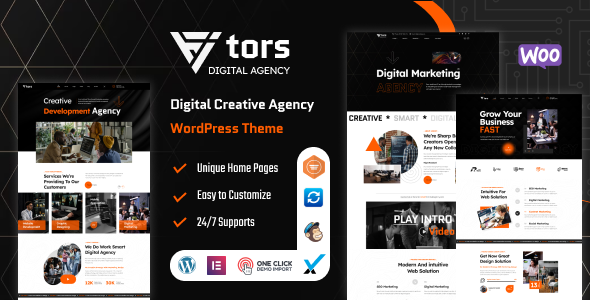
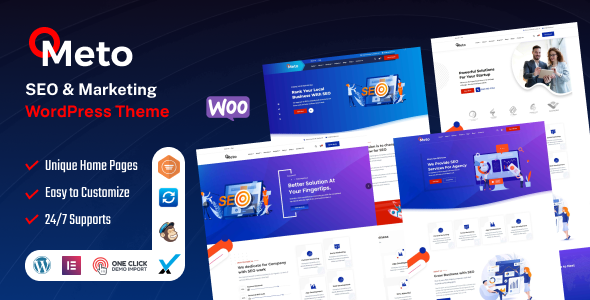
For examples of marketing and agency-focused design, look at products like Moxes, an SEO and digital marketing agency theme, Vitors, a digital marketing agency theme, and Meto, an SEO and marketing theme, which show service pages, case study layouts, and enquiry flows built for agencies. Choose the theme that explains your services specifically, proves results honestly, and turns interest into enquiries without friction. Your website is your best case study. Make it one.
Turning your site into a sales asset
An agency website should generate enquiries even when nobody is watching it, and that means treating it as a product, not a brochure. The highest-converting element on most agency sites is a free audit offer, because it gives prospects a concrete reason to share their website address and a taste of how the agency thinks. Present the audit clearly: what it covers, what the prospect receives, and how long it takes. Deliver it well, because the audit itself is the pitch. A generic audit report tells the prospect you will treat their business generically too.
Reporting samples are the second asset. Prospects want to know what they will receive each month, so show them: a redacted sample report, an explanation of what each section means, and how often they will hear from you. Agencies that hide their reporting behind sales calls raise suspicion, while agencies that show it build confidence. And explain retainers plainly. What is included, what is not, how work is prioritised, and how a client can pause or leave. Transparency about commercial terms is a competitive advantage in an industry where prospects expect vagueness.
- Offer a free audit with a clear scope, deliverable, and turnaround.
- Show a redacted sample report so prospects know what they will receive.
- Explain retainers plainly: included work, limits, and exit terms.
- Keep the blog active with genuinely useful advice, not sales posts.
The themes in this post, compared
Every theme below is named in the article itself. The post does not quote prices, so check the product page for the current price.
| Theme | Format | What the post says about it | Price noted in the post |
|---|---|---|---|
| Moxes | WordPress theme | Moxes, an SEO and digital marketing agency theme. | See the product page |
| Meto | WordPress theme | Meto, an SEO and marketing theme, which show service pages, case study layouts, and enquiry flows built for agencies. | See the product page |
| Vitors | WordPress theme | Vitors, a digital marketing agency theme. | See the product page |
Frequently asked questions
Why does the post emphasise proof is the whole pitch for SEO agency WordPress themes for lead generation?
SEO is intangible, so proof carries the sale. Case studies should be proper pages, not sliders: the client’s situation, what was done, and the outcome, presented honestly and specifically. In practice, that means judging a WordPress theme on this point before you buy, not after the site is built — open the live demo, find the section the post describes, and check it with your own content in place.
What makes Moxes a good fit for a SEO agency WordPress theme for lead generation?
Moxes, an SEO and digital marketing agency theme. That is the post’s own judgement, and it is worth verifying against the live demo: check the Moxes demo with your own images and copy, because a theme that looks right with stock content can feel different with yours.
What makes Meto a good fit for a SEO agency WordPress theme for lead generation?
Meto, an SEO and marketing theme, which show service pages, case study layouts, and enquiry flows built for agencies. That is the post’s own judgement, and it is worth verifying against the live demo: check the Meto demo with your own images and copy, because a theme that looks right with stock content can feel different with yours.
How much should I budget for a SEO agency WordPress theme for lead generation?
The post does not quote a price for SEO agency WordPress themes for lead generation, so treat the theme as one line in a small budget, not the whole budget. As a guide, WordPress themes on Expert Themes are listed at $20 and HTML templates at $10, with hosting and a domain on top. Check the product page for the current price before you decide, and count any paid plugins you will need.
Will a SEO agency WordPress theme for lead generation work properly on a phone?
The post treats mobile as a first check rather than an afterthought, and that is the right order: most visitors in this niche arrive on a phone, so open the demo on your own phone and test the menu, the forms, and the main call to action before you buy.
Prices and theme availability change — check the product page before buying. The themes named here were current when the post was written, so test the live demo against your own content before choosing, and confirm the theme is still actively updated.
Sources
- WordPress.org — Theme Handbook: theme requirements and review guidelines (accessed November 2026)
- Expert Themes — Moxes product page (accessed November 2026)
- Expert Themes — Meto product page (accessed November 2026)
- ThemeForest — Expert Themes seller page, member since July 2016 (accessed November 2026)