Marketing WordPress themes with Elementor and landing pages

By Shehzad Hussain · Last updated: November 2026
An agency I know rebuilt a client’s landing page in an afternoon, launched it, and watched conversions double — not because the new page was prettier, but because the old one had taken three weeks to change. That is the real promise of a marketing theme paired with Elementor: not prettier pages, but faster ones. If your theme makes landing page changes slow, expensive, or developer-dependent, it is failing at the one job a marketing site has.
Elementor’s value for marketing teams is speed of iteration. A campaign needs a page this week, a variant next week, and a seasonal version the week after. The theme should support that rhythm: clean Elementor compatibility, templates you can duplicate and adjust, and global styles that keep every page on brand without rebuilding headers and footers each time. Test this directly. Duplicate a demo landing page, change the headline, swap an image, adjust a form, and publish. If that takes more than twenty minutes, something in the theme is fighting the builder.
A landing page is an argument, not a brochure
Good landing pages follow a structure that has nothing to do with templates and everything to do with persuasion: a headline that states the outcome, proof that you can deliver it, an explanation of how it works, answers to the obvious objections, and one clear action. A marketing theme should give you the building blocks for that argument — strong hero sections, testimonial and logo displays, feature comparisons, pricing tables, and forms — without forcing every page into the same order. The best themes offer varied section designs you can combine, not a single rigid page that every campaign must squeeze into.
Forms deserve special attention. A marketing site lives on enquiries, and the form is where interest becomes a lead. The theme should work cleanly with established form plugins, with styling that matches the site and fields that can be adjusted per campaign. Long forms kill conversions, so you need the freedom to ask for less on a first touch and more on a consultation request. If the theme’s form styling breaks on mobile or hides the submit button below the fold, fix that before launch, not after the first campaign underperforms.
Measurement is part of the design
A landing page you cannot measure is a guess. The theme should make it easy to add tracking, connect analytics, and run experiments: duplicate a page, change one element, and compare. Page speed is part of measurement too, because a slow landing page loses visitors before your headline even renders. Be honest about which Elementor widgets you actually use. A theme stuffed with dozens of widgets you will never touch adds weight to every page. The leaner the setup, the faster the pages, and the cleaner the data.
Consistency across campaigns is the quieter challenge. When several people build pages, brand drift happens fast: different button styles, different spacing, different tones. A theme with proper global colours, typography, and reusable sections keeps everyone aligned without a style guide nobody reads. Check that global settings actually propagate, and that a change to a button style updates everywhere instead of requiring a hunt through individual pages.
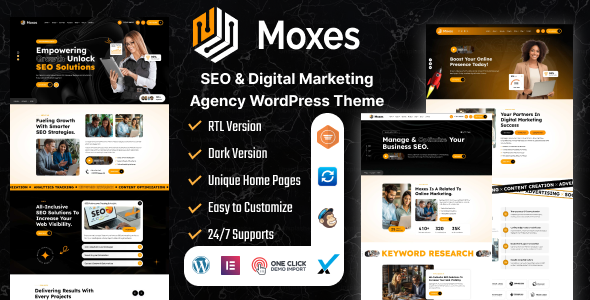
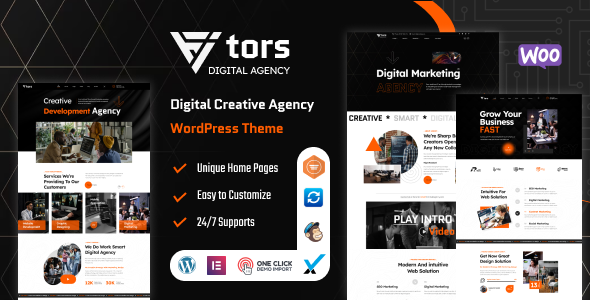
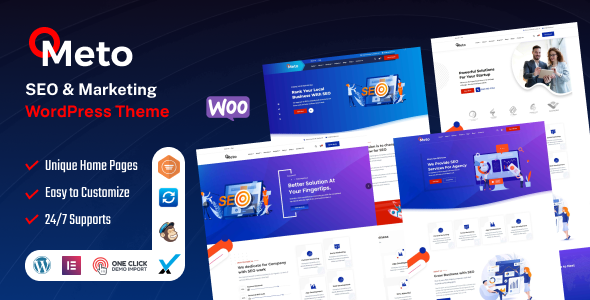
For examples of marketing-focused design, look at products like Moxes, an SEO and digital marketing agency theme, Vitors, a digital marketing agency theme, and Spring, a software and app landing theme, which show agency homepages and landing layouts built around enquiries rather than decoration. Pick the theme that lets your team ship a good landing page in an afternoon, measure it honestly, and improve it next week. That cycle, repeated, is worth more than any single perfect page.
Building a library, not a pile of pages
After a year of campaigns, a marketing team can easily have fifty landing pages with no system at all: duplicated sections, inconsistent branding, and nobody sure which pages are still live. The fix is to treat landing pages as a library from the start. Name pages consistently, keep a simple index of live campaigns with their dates and owners, and retire pages that are no longer running instead of letting them linger in search results. A theme that supports reusable sections and templates makes this far easier, because a new campaign starts from a proven structure rather than from scratch or from a copy of a copy.
Guardrails help more than rules do. Agree on a small set of approved section designs, button styles, and form layouts, and build them as reusable blocks or templates that the whole team uses. When someone wants something new, they propose it as an addition to the library, not as a one-off page. This keeps the brand coherent, speeds up production, and makes measurement meaningful, because pages built from the same components can be compared fairly. Review the library quarterly: remove what no longer performs, update what is outdated, and keep the set small enough that everyone knows it.
- Name and index every live landing page with its campaign and owner.
- Retire finished campaigns instead of letting them linger in search.
- Build new pages from reusable sections, not copies of old pages.
- Review the library quarterly and keep the approved set small.
The themes named in this post, compared
The post names four themes for marketing and landing pages. Its own checks are compatibility with Elementor, editable sections, and a design that survives real campaign use.
| Theme | Format | What the post says about it | Price noted in the post |
|---|---|---|---|
| Global | HTML template | Global is listed by the post as a marketing WordPress theme with Elementor and landing pages that suits this use, and the comparison below records what the post itself says about it. | See the product page |
| Moxes | WordPress theme | Moxes is listed by the post as a marketing WordPress theme with Elementor and landing pages that suits this use, and the comparison below records what the post itself says about it. | See the product page |
| Spring | WordPress theme | Spring is listed by the post as a marketing WordPress theme with Elementor and landing pages that suits this use, and the comparison below records what the post itself says about it. | See the product page |
| Vitors | WordPress theme | Vitors is listed by the post as a marketing WordPress theme with Elementor and landing pages that suits this use, and the comparison below records what the post itself says about it. | See the product page |
Frequently asked questions
Why does the post treat speed of iteration as the main test for marketing WordPress themes with Elementor and landing pages?
Elementor’s value for marketing teams is speed of iteration. A campaign needs a page this week, a variant next week, and a seasonal version the week after. In practice, that means judging a marketing WordPress theme with Elementor and landing pages on this point before you buy, not after the site is built — open the live demo, find the section the post describes, and check it with your own content in place.
What makes Global a good fit for marketing WordPress themes with Elementor and landing pages?
Global is listed by the post as a marketing WordPress theme with Elementor and landing pages that suits this use, and the comparison below records what the post itself says about it. That is the post’s own judgement, and it is worth verifying against the live demo: check the Global demo with your own images and copy, because a theme that looks right with stock content can feel different with yours.
What makes Moxes a good fit for marketing WordPress themes with Elementor and landing pages?
Moxes is listed by the post as a marketing WordPress theme with Elementor and landing pages that suits this use, and the comparison below records what the post itself says about it. That is the post’s own judgement, and it is worth verifying against the live demo: check the Moxes demo with your own images and copy, because a theme that looks right with stock content can feel different with yours.
How much should I budget for marketing WordPress themes with Elementor and landing pages?
The post does not quote a price for marketing WordPress themes with Elementor and landing pages, so treat the theme as one line in a small budget, not the whole budget. As a guide, WordPress themes on Expert Themes are listed at $20 and HTML templates at $10, with hosting and a domain on top. Check the product page for the current price before you decide, and count any paid plugins you will need.
Will a marketing WordPress themes with Elementor and landing pages site work properly on a phone?
The post treats mobile as a first check rather than an afterthought, and that is the right order: most visitors in this niche arrive on a phone, so open the demo on your own phone and test the menu, the forms, and the main call to action before you buy.
This is general guidance for choosing in this niche, not a guarantee: a theme that scores well on a demo can still slow down once your own images, plugins, and tracking are added. Test any marketing WordPress themes with Elementor and landing pages with your real content before you commit.
Sources
- WordPress.org — Theme Handbook: theme requirements and review guidelines (accessed November 2026)
- Expert Themes — Global product page (accessed November 2026)
- Expert Themes — Moxes product page (accessed November 2026)
- Elementor — Official documentation: Elementor editor and widgets (accessed November 2026)