Best SEO and social media agency themes

By Shehzad Hussain · Last updated: November 2026
An agency’s website has an awkward job: it must sell marketing skill using marketing. Every visitor is a professional buyer who has seen a thousand agency sites, and they will judge yours the way they judge their own vendors, quickly and without mercy. That is why agency themes fail in a specific way. They look polished and say nothing. The ones that win do the opposite. They show work, name results honestly, and make the next conversation easy to start.
Case studies are the homepage
For an agency, the portfolio is not a section. It is the argument. A theme should give case studies the prominence they deserve: a clear client problem, what the agency actually did, and what changed afterwards, in numbers the client agreed to share. Vague claims about growth and visibility convince nobody who buys marketing for a living. Specific stories about a ranking recovered, a cost per lead reduced, or a launch delivered on time convince the right people immediately.
When you test a theme, look at its case study layout before anything else. Does it give room for a real narrative, or does it reduce each project to a thumbnail and a logo? Does it let you show the work itself, screenshots, campaigns, content, rather than just describing it? An agency that cannot show its work on its own site is asking to be disbelieved.
Services pages that answer real questions
Buyers arrive with specific problems: rankings have fallen, ads cost too much, social content is not converting. Service pages should answer those problems directly, explaining what the agency does, how it works, what it costs or how pricing is structured, and what the client should expect in the first ninety days. A theme that forces every service into the same three-paragraph box will flatten those answers into slogans.
Look for service layouts with room for process, deliverables, and honest expectations. A page that explains that SEO takes months, that paid social needs testing budget, and that reporting is monthly and transparent will win more serious clients than a page promising fast results. Serious clients are the ones worth winning.
Reporting and transparency as design
Agencies lose clients over reporting more than over results. A theme cannot write your reports, but it can give you the pages to explain your approach: how reporting works, what metrics you track, how often clients hear from you, and who their contact is. A dedicated process page, written plainly, prevents more misunderstandings than any contract clause.
The same applies to pricing. Retainers, project fees, and audits each need a clear presentation. A theme with flexible pricing layouts lets you present those options without cramming them into a single table that confuses everyone.
Local and niche proof
Most agencies win work locally or in a niche before they win it broadly. The theme should support that with location pages and industry pages that can be built and maintained easily. A page for each city served, with genuine local detail, and a page for each industry served, with relevant case studies, will bring in better enquiries than a generic services list.
Team pages matter here too. Clients hire people, not agencies. A theme that presents team members as real people with real expertise, rather than a grid of headshots, helps a buyer imagine working with you. Keep those pages current. A team page showing people who left two years ago is worse than no team page at all.
What agency themes should look like
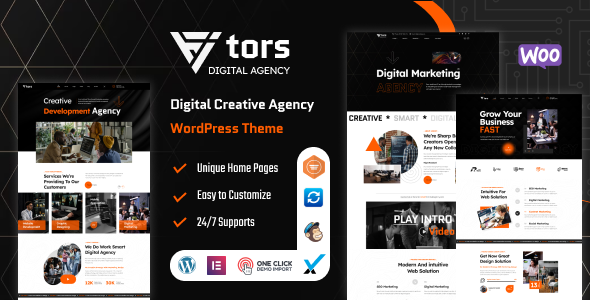
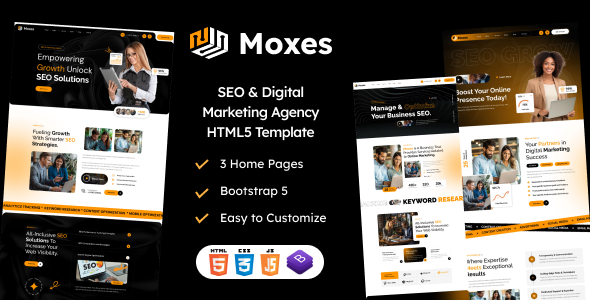
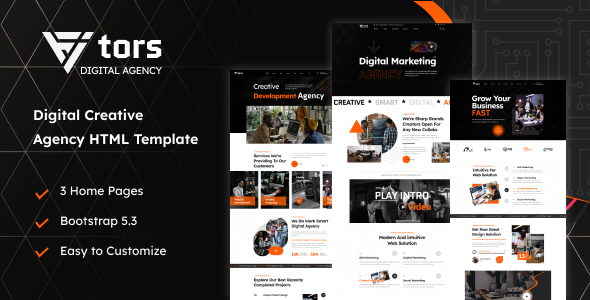
The strongest agency designs share a discipline: work first, claims second, contact always visible. The Moxes SEO and digital marketing agency theme and the Vitors digital marketing agency theme both show that structure: service pages with room for process, case studies that lead with outcomes, and enquiry routes that stay in reach. Study how they balance proof and persuasion, then demand the same from any theme you consider.
Proposals that close
Most agency work is won or lost in the proposal, and the website should feed that process rather than sit apart from it. A strong agency site offers something concrete before the proposal: a free audit, a teardown of the prospect’s current presence, or a short diagnostic that demonstrates expertise on their actual business. Those offers convert far better than a generic contact form, because they give the prospect a reason to start a conversation and give the agency material to write a proposal that speaks to real problems.
The proposal itself should be treated as a product of the site. A dedicated page explaining how proposals work, what they include, and how long they take removes uncertainty and filters out buyers who were never serious. Agencies that explain their process publicly attract clients who respect process, and those clients are the ones who stay.
Choose the agency theme that lets your work speak first, your process read honestly, and your next client start a conversation without hunting for a form. In agency marketing, clarity is the credential.
The themes in this post, compared
Every theme below is named in the article itself. The post does not quote prices, so check the product page for the current price.
| Theme | Format | What the post says about it | Price noted in the post |
|---|---|---|---|
| Moxes | WordPress theme | Moxes SEO and digital marketing agency theme and the. | See the product page |
| Vitors Digital Marketing Agency | WordPress theme | Vitors digital marketing agency theme both show that structure: service pages with room for process, case studies that lead with outcomes, and enquiry routes that stay in reach. | See the product page |
| Vitors | WordPress theme | Vitors digital marketing agency theme both show that structure: service pages with room for process, case studies that lead with outcomes, and enquiry routes that stay in reach. | See the product page |
Frequently asked questions
Why does the post emphasise case studies are the homepage for SEO and social media agency themes?
For an agency, the portfolio is not a section. A theme should give case studies the prominence they deserve: a clear client problem, what the agency actually did, and what changed afterwards, in numbers the client agreed to share. In practice, that means judging a WordPress theme on this point before you buy, not after the site is built — open the live demo, find the section the post describes, and check it with your own content in place.
What makes Moxes a good fit for a SEO and social media agency theme?
Moxes SEO and digital marketing agency theme and the. That is the post’s own judgement, and it is worth verifying against the live demo: check the Moxes demo with your own images and copy, because a theme that looks right with stock content can feel different with yours.
What makes Vitors Digital Marketing Agency a good fit for a SEO and social media agency theme?
Vitors digital marketing agency theme both show that structure: service pages with room for process, case studies that lead with outcomes, and enquiry routes that stay in reach. That is the post’s own judgement, and it is worth verifying against the live demo: check the Vitors Digital Marketing Agency demo with your own images and copy, because a theme that looks right with stock content can feel different with yours.
How much should I budget for a SEO and social media agency theme?
The post does not quote a price for SEO and social media agency themes, so treat the theme as one line in a small budget, not the whole budget. As a guide, WordPress themes on Expert Themes are listed at $20 and HTML templates at $10, with hosting and a domain on top. Check the product page for the current price before you decide, and count any paid plugins you will need.
Will a SEO and social media agency theme work properly on a phone?
The post treats mobile as a first check rather than an afterthought, and that is the right order: most visitors in this niche arrive on a phone, so open the demo on your own phone and test the menu, the forms, and the main call to action before you buy.
Prices and theme availability change — check the product page before buying. The themes named here were current when the post was written, so test the live demo against your own content before choosing, and confirm the theme is still actively updated.
Sources
- WordPress.org — Theme Handbook: theme requirements and review guidelines (accessed November 2026)
- Expert Themes — Moxes product page (accessed November 2026)
- Expert Themes — Vitors Digital Marketing Agency product page (accessed November 2026)
- ThemeForest — Expert Themes seller page, member since July 2016 (accessed November 2026)