Best WooCommerce React website templates for online stores

By Shehzad Hussain · Last updated: November 2026
Headless commerce is one of those phrases that sounds impressive in a pitch and confusing everywhere else, so let us translate it. It means the shop window and the cash register live in different systems. The window, built in React, is fast and flexible. The register, a commerce platform with an API, handles products, carts, payments, and orders. The two talk to each other over the network. For the right store, that separation is powerful. For the wrong store, it is an expensive way to rebuild a solved problem.
Why separate the window from the register
A React storefront can do things a traditional store theme cannot do easily. Product filtering that updates instantly. A configurator that rebuilds a product visually as options change. A cart that never loses its contents as the shopper browses. A checkout flow designed exactly for your customers rather than inherited from a platform default. When the shopping experience itself is your competitive advantage, that freedom matters.
It also matters for speed. A React storefront can serve pages from a content delivery network, close to the shopper, while the commerce platform works behind the scenes. For stores with international customers, that can mean the difference between a page that appears instantly and one that waits on a distant server.
What headless actually costs
The cost is not the template. It is everything around it. Someone must connect the storefront to the commerce API, handle cart and checkout states, manage payment flows, and keep the whole system working when either side updates. That is development work, ongoing, not a one-time setup. A store that changes products weekly, runs frequent promotions, and needs new features regularly will pay for that development continuously.
There is also a features gap to face honestly. Traditional store platforms ship with years of accumulated commerce features: discount engines, tax rules, shipping integrations, abandoned cart recovery, and reporting. A headless build starts without those, and each one must be built or bought. Before you choose headless, list the commerce features you rely on today and check which ones your headless plan covers. The gaps are where the budget goes.
When headless earns its keep
Headless makes sense in specific situations. A brand with a strong design identity that a standard theme cannot express. A store with complex products that need configuration. A business selling across many channels, web, mobile app, and in-store, that wants one commerce backend feeding them all. A team with front-end developers already on staff who can maintain the storefront as a normal project.
It makes less sense for a straightforward shop with standard products, standard shipping, and standard checkout. That shop will launch faster, cheaper, and with more features on a traditional platform, and the money saved will buy better product photography, which sells more than a custom cart animation.
Judging a React storefront template
When you evaluate a React storefront template, look past the demo products and ask structural questions. How does the cart state work, and does it survive a page refresh? How are product variants handled, and what happens with an impossible combination? How does checkout connect to a payment provider, and what does the shopper see if payment fails? A template that answers those questions clearly in its documentation was built by people who have run a real store.
Also check the catalogue at realistic size. A template that flies with twelve products may crawl with twelve hundred, especially if it loads everything into the browser at once. Pagination, lazy loading, and server-side filtering are not glamorous features, but they are what keep a large store usable.
A starting point for the design
Search that understands shoppers
Shoppers rarely search with your catalogue’s exact words. They misspell, they use synonyms, and they describe what they want rather than naming a product. A React storefront has the chance to handle that gracefully: instant results as they type, tolerance for typos, and suggestions when a search returns nothing. A zero-result page should never be a dead end. It should suggest related categories, popular products, and a way to ask for help, because a shopper who finds nothing and is offered nothing leaves.
Merchandising belongs in search too. The order of results should reflect what you want to sell, not just what matches alphabetically. Featured products, seasonal items, and best sellers deserve prominence in results, as long as the ranking stays honest and the shopper can still sort by price. Search is where a large store either feels helpful or feels like a warehouse, and the difference is entirely in these details.
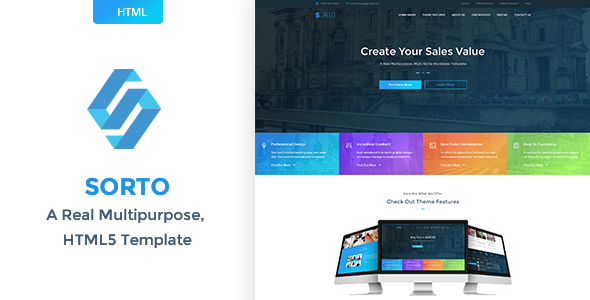
The visual language of a good shop does not change with the architecture. The Sorto multipurpose HTML template shows the standard to hold your React storefront against: products easy to scan, prices never ambiguous, and a next step always visible. Reproduce that clarity in React, add the interactivity that justifies the architecture, and keep a ruthless eye on the features list. Headless commerce is a tool for a specific kind of store. Make sure yours is that kind before you pay for it.
The themes in this post, compared
Every theme below is named in the article itself. The post does not quote prices, so check the product page for the current price.
| Theme | Format | What the post says about it | Price noted in the post |
|---|---|---|---|
| React | React template | React Templates · 04 Oct, 2026 Best WooCommerce React website templates for online stores Headless commerce is one of those phrases that sounds impressive in a pitch and confusing everywhere else, so let us translate it. | See the product page |
| Sorto Multipurpose | React template | Sorto multipurpose HTML template shows the standard to hold your. | See the product page |
| Sorto | React template | Sorto multipurpose HTML template shows the standard to hold your. | See the product page |
Frequently asked questions
Why does the post emphasise why separate the window from the register for WooCommerce React website templates for online stores?
A React storefront can do things a traditional store theme cannot do easily. In practice, that means judging a React template on this point before you buy, not after the site is built — open the live demo, find the section the post describes, and check it with your own content in place.
What makes React a good fit for a WooCommerce React website template for online stores?
React Templates · 04 Oct, 2026 Best WooCommerce React website templates for online stores Headless commerce is one of those phrases that sounds impressive in a pitch and confusing everywhere else, so let us translate it. That is the post’s own judgement, and it is worth verifying against the live demo: check the React demo with your own images and copy, because a theme that looks right with stock content can feel different with yours.
What makes Sorto Multipurpose a good fit for a WooCommerce React website template for online stores?
Sorto multipurpose HTML template shows the standard to hold your. That is the post’s own judgement, and it is worth verifying against the live demo: check the Sorto Multipurpose demo with your own images and copy, because a theme that looks right with stock content can feel different with yours.
How much should I budget for a WooCommerce React website template for online stores?
The post does not quote a price for WooCommerce React website templates for online stores, so treat the theme as one line in a small budget, not the whole budget. As a guide, WordPress themes on Expert Themes are listed at $20 and HTML templates at $10, with hosting and a domain on top. Check the product page for the current price before you decide, and count any paid plugins you will need.
Will a WooCommerce React website template for online stores work properly on a phone?
The post treats mobile as a first check rather than an afterthought, and that is the right order: most visitors in this niche arrive on a phone, so open the demo on your own phone and test the menu, the forms, and the main call to action before you buy.
Prices and theme availability change — check the product page before buying. The themes named here were current when the post was written, so test the live demo against your own content before choosing, and confirm the theme is still actively updated.
Sources
- React — official documentation, react.dev (accessed November 2026)
- Expert Themes — React product page (accessed November 2026)
- Expert Themes — Sorto Multipurpose product page (accessed November 2026)
- WooCommerce — official documentation (accessed November 2026)